
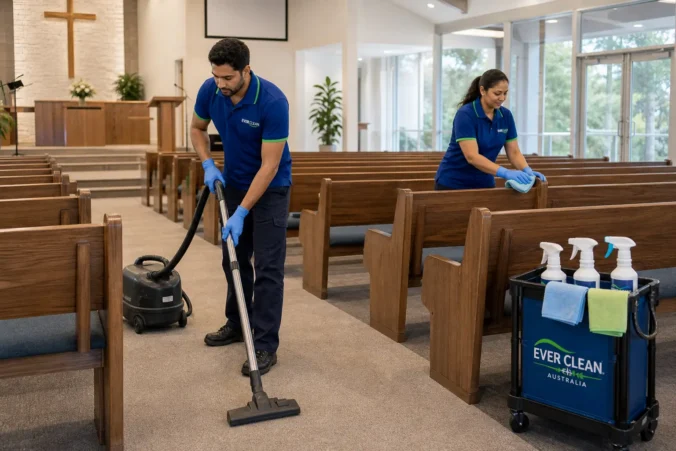
A realistic church cleaning schedule between Sunday services keeps the building hygienic, welcoming, and ready for the next congregation without burning out volunteers or overpaying for labour. In most Australian churches, the sweet spot is a quick same-day reset, a midweek deeper clean, and a short pre-service touch-up.
The right plan depends on attendance, flooring, kids’ areas, and how often the site is used for weekday groups, playgroups, or community hire.
What should they clean immediately after the Sunday service?
They should focus on fast, high-impact tasks that remove mess, reduce odours, and prevent stains setting in. A practical church cleaning schedule between Sunday services starts with a 30–90 minute “reset” straight after the final service.
Priority areas are foyers, toilets, the auditorium, and any coffee spots. The goal is “presentable and hygienic,” not perfect.
Which areas make the biggest difference in the first hour?
The biggest difference comes from the surfaces and spaces everyone touches and sees. For a church cleaning schedule between Sunday services, they should triage in this order.
They should empty bins, spot-mop spills, and wipe counters first. Then they should handle toilets and entry points, because those shape first impressions and hygiene risk.
How can they run a fast post-service reset without a big team?
They can run it like a checklist with zones and clear hand-offs. A workable church cleaning schedule between Sunday services assigns two to four people to toilets and bins, while the rest handle seating, floors, and the café area.
They should keep supplies pre-packed in a caddy per zone. They should also store a cordless vacuum, microfibre cloths, and spray near the auditorium for speed.
What does a realistic same-day checklist look like?
It should be short, timed, and repeatable. This type of church cleaning schedule between Sunday services is designed to finish before everyone heads home.
They should:
- Empty all bins and replace liners
- Wipe café benches, sinks, and splash zones
- Clean and restock toilets (paper, soap, sanitiser)
- Spot-clean visible marks on glass and doors
- Quick vacuum high-traffic areas and stage edges
- Spot-mop spills, especially near entry mats
- Remove lost property to a single tub
When should they do the deeper clean during the week?
They should schedule it midweek, ideally Tuesday to Thursday, so the building stays fresh without getting dirty again before Sunday. For many sites, the deep clean is the anchor of a church cleaning schedule between Sunday services.
This is when they tackle floors properly, dust high points, and do a more thorough bathroom clean. It also suits contractor availability in most Australian metro areas.
How long should a midweek deep clean take in Australia?
It depends on size and traffic, but many churches can plan around 2–6 labour hours for a modest site and 8–16 labour hours for larger campuses. A sensible church cleaning schedule between Sunday services scales by square metres and usage, not by guesswork.
They should track actual time for three weeks, then lock the baseline. That helps avoid underestimating toilets, kids’ rooms, and halls.
What tasks belong in the weekly deep clean?
They should target dirt that builds slowly and makes the site feel tired. A solid church cleaning schedule between Sunday services treats this as the “restore” session.
They should:
- Vacuum all carpeted areas thoroughly, including under rows where possible
- Mop hard floors with the right chemical for vinyl, tiles, or sealed timber
- Disinfect toilets more thoroughly, including bowls, bases, and touchpoints
- Clean mirrors, glass panels, and entrance doors
- Dust ledges, skirtings, window sills, and AV desks
- Wipe chairs (especially arms) and commonly handled surfaces
- Refresh kitchenette or café back-of-house areas
How should they handle children’s ministry spaces safely?
They should treat kids’ rooms as higher-risk, higher-touch areas. Any church cleaning schedule between Sunday services should include disinfecting toys, tables, and door handles, plus checking for spills and nappy bin odours.
They should use child-safe products that match Australian labelling and follow dwell times. Soft toys are better rotated and machine-washed than sprayed.
What about weekday groups, hall hire, and community users?
They should add “after-use” mini-cleans whenever the building is used, rather than hoping the weekly clean covers everything. A realistic church cleaning schedule between Sunday services includes quick resets after playgroups, youth nights, AA meetings, and private functions.
They should require hirers to do basics like rubbish removal and pack-down. Then the church team should do toilets, floors, and touchpoints.
How can they prevent toilets from becoming the weekly pain point?
They can prevent blowouts by restocking and spot-checking twice a week, not just on Sunday. Toilets often decide whether a church cleaning schedule between Sunday services feels like it works or fails.
They should keep a simple log inside each amenities cupboard: date, restock, and any maintenance issues. They should also fix dripping taps and faulty dispensers quickly, because they create constant mess.
What should they do the day before the next Sunday service?
They should do a short “presentation pass” on Saturday or early Sunday morning. This step makes a church cleaning schedule between Sunday services feel professional even if the midweek clean happened days earlier.
They should focus on entrances, toilets, and any visible streaks on glass. They should also do a quick vacuum of the foyer and main walkways.
How can they keep the sanctuary or auditorium looking clean every week?
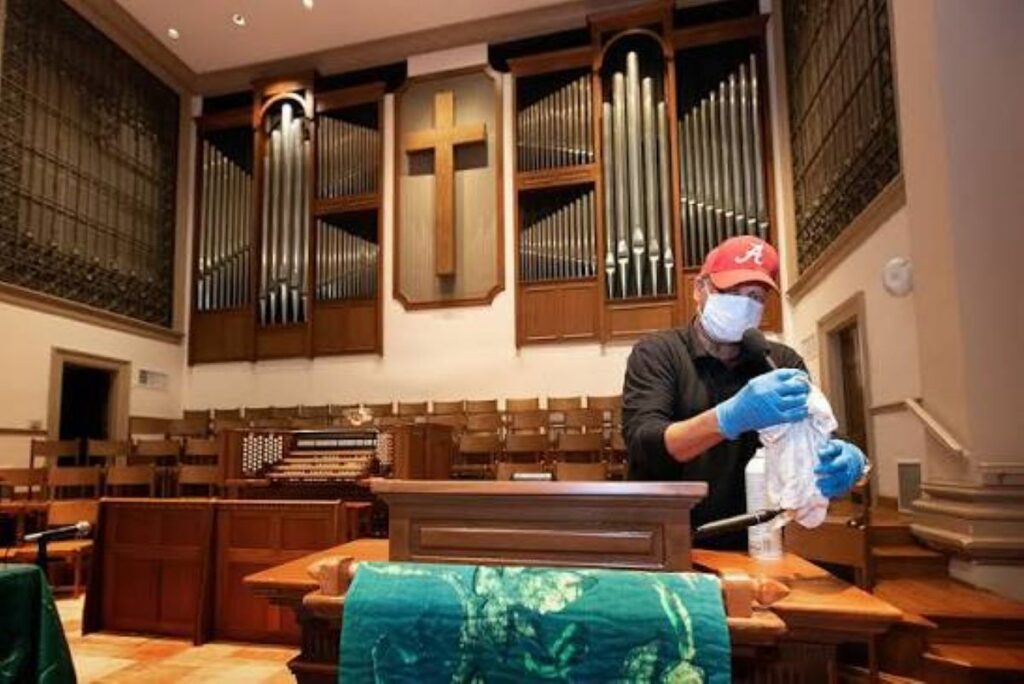
They should treat it as a “light-clean often” space. In a good church cleaning schedule between Sunday services, they vacuum main aisles weekly and detail edges and under seating on a rotating basis.
They should also plan for gum, candle wax, communion spills, and mystery marks on chairs. A small stain kit and a handheld extractor can save carpets from permanent spots.
How do they adjust the schedule for rain, red dirt, or coastal sand?
They should shift effort to entrances and floors when weather or location drives dirt. An Australian church cleaning schedule between Sunday services should assume wet weeks in Sydney, Melbourne, Hobart, and Brisbane, plus dust in inland areas and sand near beaches.
They should add extra matting, increase vacuum frequency, and spot-mop more often. Entry mat cleaning often beats cleaning the whole building twice.
Should they use volunteers, paid staff, or a commercial cleaner?
They should choose based on consistency, risk, and capacity. Many churches use a hybrid: volunteers do the Sunday reset, and a contractor handles the midweek deep clean as part of the church cleaning schedule between Sunday services.
This keeps standards steady for toilets and floors. It also reduces burnout for volunteer teams, especially in growing congregations.
Other Resources : Religious affiliation in Australia
What’s a realistic example schedule they can copy?
They can use a simple three-part rhythm that fits most Australian churches. This example church cleaning schedule between Sunday services assumes one main Sunday service, a midweek clean, and light pre-service touch-ups.
They can adjust timing based on attendance and how many rooms are opened each week.
What does the “Sunday, midweek, Saturday” rhythm look like?
They should run it like this:
Sunday (post-service, 30–90 minutes)
They reset: bins, toilets, café benches, quick vacuum, spot-mop.
Midweek (2–16 labour hours, site-dependent)
They deep clean: full floors, bathrooms, dusting, glass, chair wipe-downs, kids’ areas.
Saturday or early Sunday (20–45 minutes)
They present: entrances, toilets, vacuum walkways, quick glass check, odour check.
How can they keep it realistic week after week?
They should measure what actually happens, then simplify. A church cleaning schedule between Sunday services stays realistic when each task has an owner, a time limit, and a clear “done” standard.
They should avoid adding “nice-to-haves” to the Sunday reset. Those belong in the midweek clean or a monthly rotation.
What should they add monthly or quarterly without blowing the budget?
They should batch bigger jobs into a rotating list so nothing gets ignored. A mature church cleaning schedule between Sunday services includes periodic tasks that protect flooring and reduce long-term costs.
They should rotate:
- High dusting (vents, fans, high ledges)
- Carpet spot extraction and stain treatment
- Full chair clean in sections
- Window clean beyond fingerprints
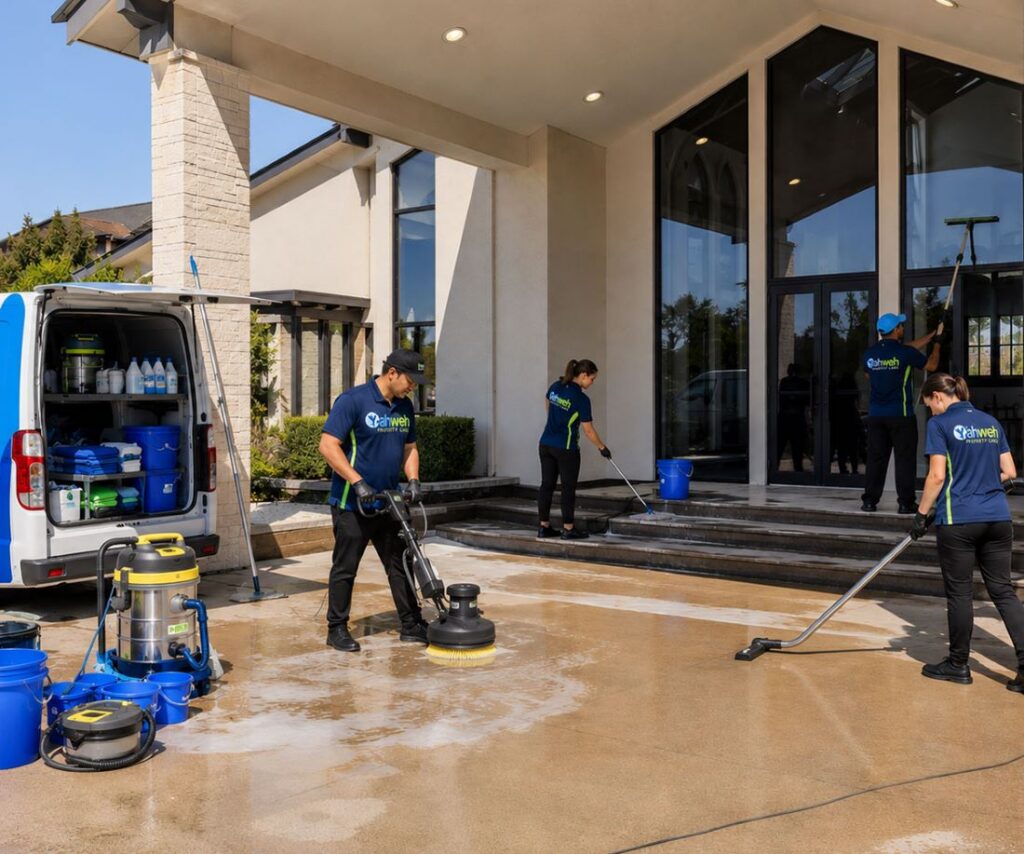
- Pressure wash entry paths if needed
- Deep clean of storage and green rooms
How do they know if the schedule is working?
They will know it’s working if toilets stay stocked, floors stay presentable, and volunteers are not constantly scrambling. A healthy church cleaning schedule between Sunday services also reduces complaints and last-minute panic before guests arrive.
They should do a quick weekly walk-through with a simple scorecard: toilets, foyer, auditorium, kids’ rooms, and odour. If one area repeatedly fails, the schedule needs rebalancing, not more effort everywhere.
More to Read : What Event Cleaning Services Cover Before, During and After a Function
Leave a Reply