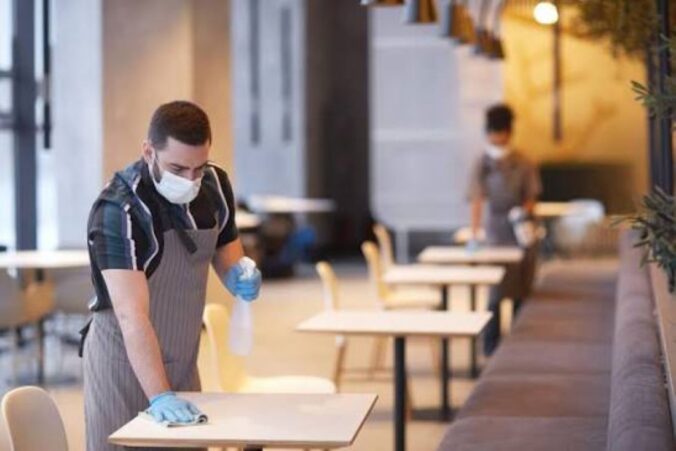
Month: September 2026

What Event Cleaning Services Cover Before, During and After a Function

Planning a function is busy enough without worrying about bins overflowing, toilets running out of paper, or sticky floors by 9pm. That’s why many organisers book event cleaning services to handle the mess, protect the venue, and keep guests comfortable.

In Australia, expectations can vary by venue, council rules, and the type of event. This guide breaks down what event cleaning services typically cover before, during, and after a function, plus what organisers should confirm in writing.

What do event cleaning services usually include before a function?

They usually start with a pre-event site clean that prepares the venue for setup and guests. In most Australian venues, this means bringing the space up to presentation standard, not doing a builder’s clean.

Common pre-event tasks include floor vacuuming or mopping, wiping surfaces, cleaning glass, sanitising touchpoints, and emptying any existing bins. Many event cleaning services also set up waste stations, liners, and back-of-house collection points to match the run sheet and floor plan.

How do they plan the clean for Australian venues and schedules?

They plan around bump-in times, venue access rules, and noise restrictions, especially in CBD sites and shared buildings. The cleaner’s roster and equipment list should match the event timeline, not guess it.

Good event cleaning services will do a walkthrough or request photos, confirm loading dock access, lifts, parking, and any inductions. They’ll also confirm whether the venue supplies consumables, keys, and storage, which is common in larger function centres across Sydney, Melbourne, Brisbane, Perth, and Adelaide.

What checks do they complete on floors, entrances, and high-traffic areas?

They focus on the areas guests notice first, because first impressions set the tone. Floors, entry glass, and restrooms are usually prioritised before doors open.

They may spot-clean carpets, detail-mop hard floors, remove scuffs, and ensure entry mats are placed correctly for wet weather. Many event cleaning services also check stair rails, door handles, and lift buttons, particularly where high guest turnover is expected.

How do they handle bins, recycling, and waste stations before guests arrive?

They generally set up bins and liners in the right quantities and locations, then label streams clearly. That matters more in Australia where venues often separate general waste, mixed recycling, and containers.

They may place back-of-house wheelie bins or cages, assign a waste run route, and prepare spare liners and gloves for quick swaps. When organised well, event cleaning services reduce overflow and keep public areas looking tidy throughout the function.

What do event cleaning services cover during a function?

During the event, they usually provide active maintenance rather than a deep clean. The goal is to keep the venue safe, presentable, and stocked without disrupting guests.

Typical duties include clearing and relining bins, spot-mopping spills, tidying foyers, wiping tables, and checking high-touch points. For corporate functions, weddings, and public events alike, event cleaning services often work quietly in the background, coordinated with venue staff and security.

How do they manage spills and slip hazards in real time?

They respond quickly to spills, broken glass, and wet entryways to reduce slips and complaints. In Australia, venues take safety seriously, so fast response is a major value-add.

They may place warning signage, isolate the area, and clean using the correct products for the surface. Experienced event cleaning services also plan ahead for high-risk zones like bars, buffet lines, dance floors, and outdoor paths after rain.

Who keeps bathrooms clean and stocked during the event?

They usually assign cleaners to routine restroom checks, with extra attention during peak breaks. For many guests, bathroom condition is the quickest way they judge an event.

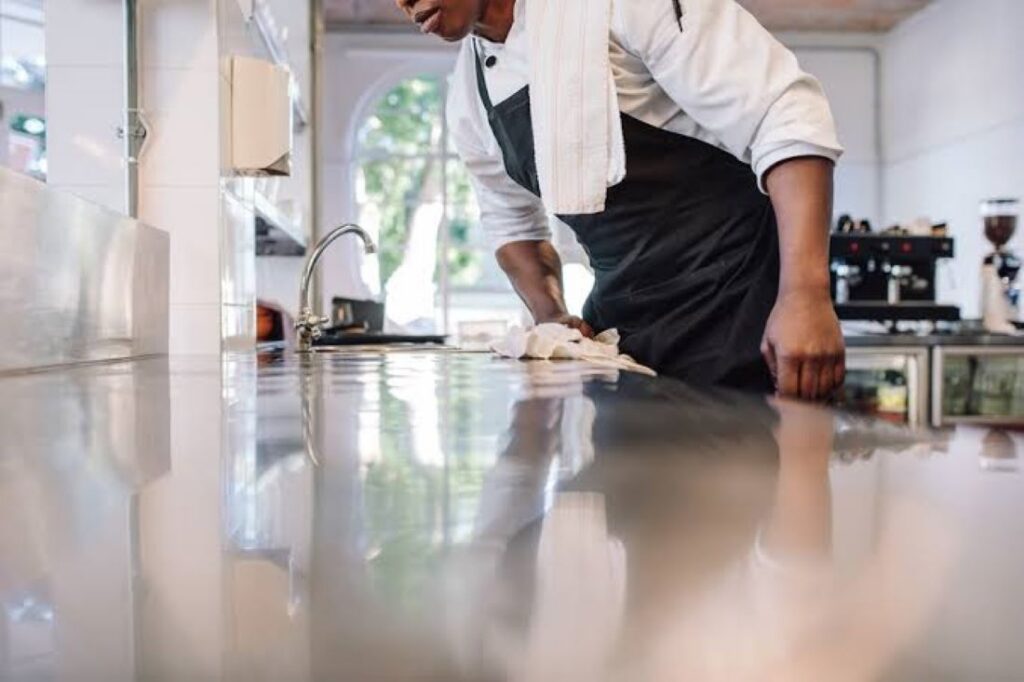
Duties often include restocking toilet paper, hand towel, and soap, wiping basins and benches, cleaning toilets as needed, and emptying sanitary bins. Many event cleaning services also manage odour control and report plumbing issues early so the organiser can escalate to venue maintenance.
event cleaning services

Do they clean while food and beverage service is running?

Yes, but they typically coordinate to avoid getting in the way of catering staff and guest flow. They’re there to support service, not compete with it.

They may clear stray cups, remove rubbish from bar areas, wipe sticky surfaces, and maintain back-of-house waste so it doesn’t pile up. In many Australian venues, event cleaning services also help keep loading and prep areas safe by reducing spills and clutter during busy service windows.

What do they cover immediately after the function ends?

They usually move into a faster, more intensive clean once guests leave. This is when floors, bins, and bathrooms can be reset properly. Check out more about Bathroom hygiene.

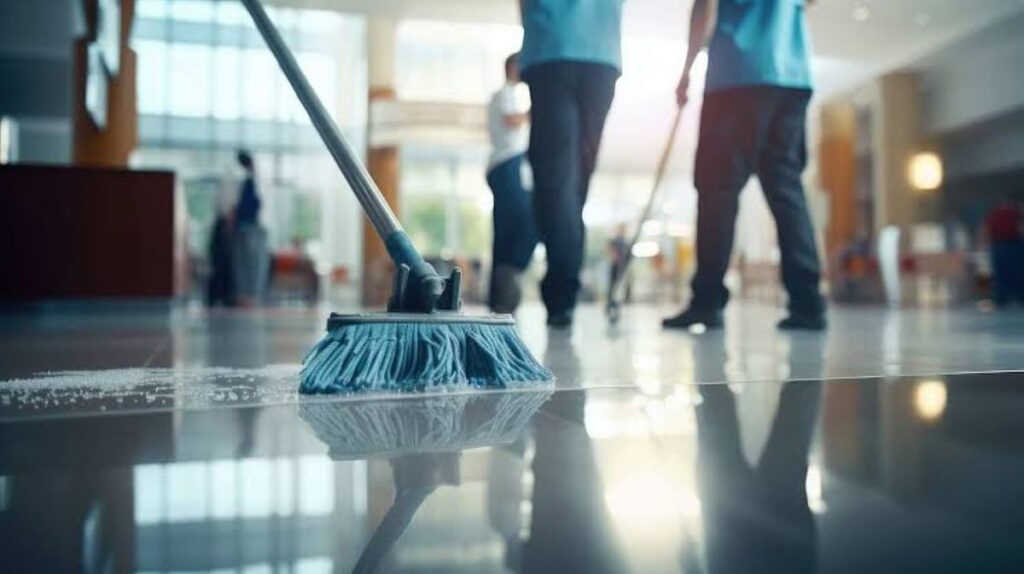
Immediate post-event tasks commonly include removing rubbish, breaking down waste stations, cleaning tables and chairs, vacuuming or mopping throughout, and resetting key areas to venue handover condition. Many event cleaning services will also check outdoor areas, car parks, and smoking zones if the booking includes them.

How do event cleaning services handle pack-down, bump-out, and rubbish removal?

They often support bump-out by keeping pathways clear and removing accumulated waste as staging, AV, and décor are dismantled. This helps crews move faster and reduces damage risk.

Depending on the agreement, event cleaning services may wheel bins to a designated waste room, compact waste, separate recyclables, or arrange extra bin pickups. Organisers should confirm whether rubbish is removed offsite or simply moved to the venue’s disposal point.

What deep cleaning might be included the next day?

Next-day cleaning is sometimes booked when venues allow a longer pack-down window or when the event is large. It’s usually more detailed than the overnight reset.

It may include stain treatment for carpets, detailed kitchen or green room cleaning, hard-floor machine scrubs, or outdoor litter sweeps at first light. Some event cleaning services also provide a final presentation pass before a morning inspection, which is useful for council or venue compliance.

What is usually excluded, and what should organisers confirm in the quote?

Many issues happen because people assume something is included when it isn’t. A clear scope prevents surprise invoices and tense handovers.

Often-excluded items include biohazard cleanup, mould remediation, flood extraction, pressure washing, high-access cleaning, and removal of bulky items like pallets or furniture. Organisers should also confirm consumables, bin hire, tip fees, parking costs, and penalty rates. Reputable event cleaning services will spell these out upfront.

How can organisers choose the right event cleaning services in Australia?

They should look for cleaners who understand venues, time pressure, and safety, not just general office cleaning. The right provider will ask practical questions and put the scope in writing.

They can check insurance, SWMS where relevant, staff vetting, and whether the team has worked similar events in Australia. It also helps to confirm who their on-site supervisor is, how issues are escalated, and what “handover standard” means for that venue. The best event cleaning services make the function feel effortless because problems never become visible.
event cleaning services

What should be on a simple pre-event cleaning checklist?

They should keep it short, specific, and matched to the run sheet. A checklist also makes it easier to brief staff and confirm the venue handover.

A basic checklist can include: entry and foyer presentation, floors finished, waste stations set, bathrooms fully stocked, glass and mirrors polished, back-of-house bins ready, and a final walkthrough 30 to 60 minutes before doors. When used properly, event cleaning services can tick these items off and reduce last-minute stress.

More to Read : How Childcare Cleaning Services Handle Toys and High-Touch Surfaces
What’s a Realistic Church Cleaning Schedule Between Sunday Services?

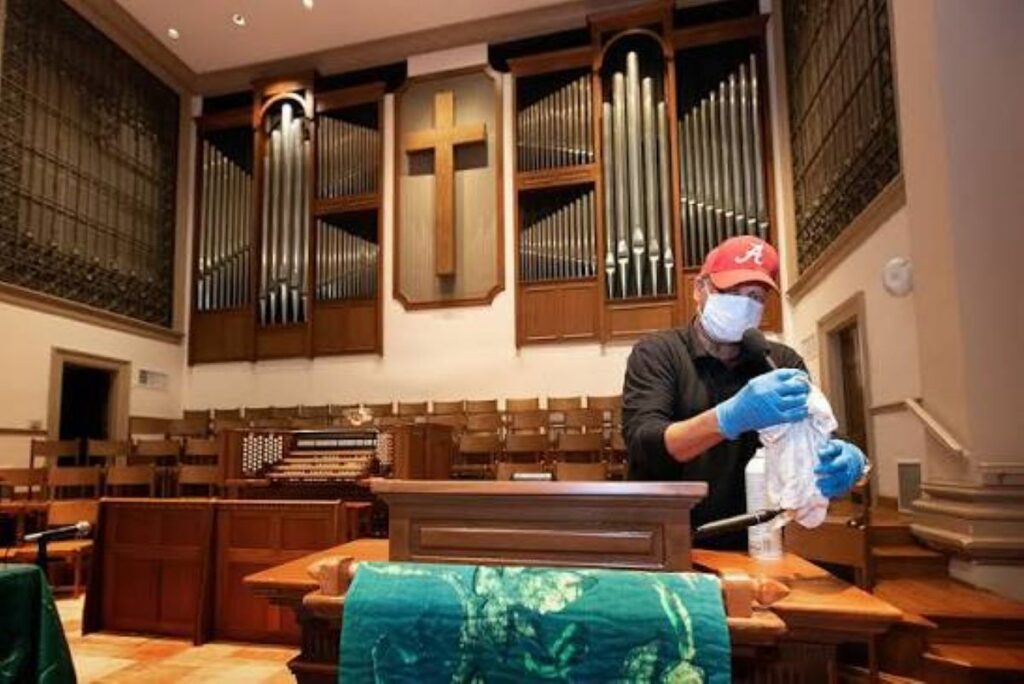
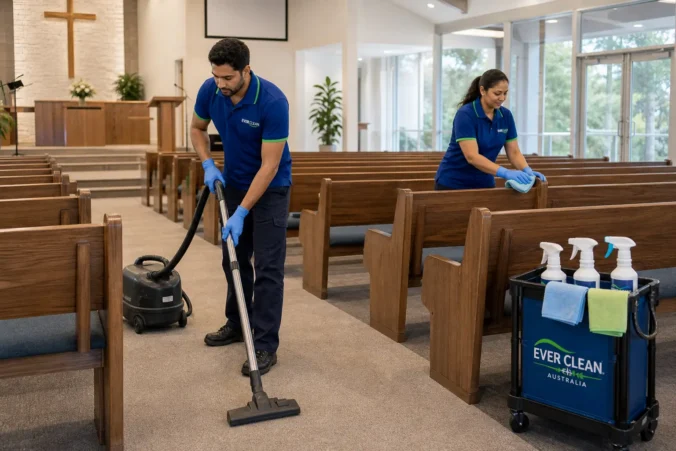
A realistic church cleaning schedule between Sunday services keeps the building hygienic, welcoming, and ready for the next congregation without burning out volunteers or overpaying for labour. In most Australian churches, the sweet spot is a quick same-day reset, a midweek deeper clean, and a short pre-service touch-up.

The right plan depends on attendance, flooring, kids’ areas, and how often the site is used for weekday groups, playgroups, or community hire.

What should they clean immediately after the Sunday service?

They should focus on fast, high-impact tasks that remove mess, reduce odours, and prevent stains setting in. A practical church cleaning schedule between Sunday services starts with a 30–90 minute “reset” straight after the final service.

Priority areas are foyers, toilets, the auditorium, and any coffee spots. The goal is “presentable and hygienic,” not perfect.

Which areas make the biggest difference in the first hour?

The biggest difference comes from the surfaces and spaces everyone touches and sees. For a church cleaning schedule between Sunday services, they should triage in this order.

They should empty bins, spot-mop spills, and wipe counters first. Then they should handle toilets and entry points, because those shape first impressions and hygiene risk.

How can they run a fast post-service reset without a big team?

They can run it like a checklist with zones and clear hand-offs. A workable church cleaning schedule between Sunday services assigns two to four people to toilets and bins, while the rest handle seating, floors, and the café area.

They should keep supplies pre-packed in a caddy per zone. They should also store a cordless vacuum, microfibre cloths, and spray near the auditorium for speed.

What does a realistic same-day checklist look like?

It should be short, timed, and repeatable. This type of church cleaning schedule between Sunday services is designed to finish before everyone heads home.

They should:

  • Empty all bins and replace liners
  • Wipe café benches, sinks, and splash zones
  • Clean and restock toilets (paper, soap, sanitiser)
  • Spot-clean visible marks on glass and doors
  • Quick vacuum high-traffic areas and stage edges
  • Spot-mop spills, especially near entry mats
  • Remove lost property to a single tub

When should they do the deeper clean during the week?

They should schedule it midweek, ideally Tuesday to Thursday, so the building stays fresh without getting dirty again before Sunday. For many sites, the deep clean is the anchor of a church cleaning schedule between Sunday services.

This is when they tackle floors properly, dust high points, and do a more thorough bathroom clean. It also suits contractor availability in most Australian metro areas.

How long should a midweek deep clean take in Australia?

It depends on size and traffic, but many churches can plan around 2–6 labour hours for a modest site and 8–16 labour hours for larger campuses. A sensible church cleaning schedule between Sunday services scales by square metres and usage, not by guesswork.

They should track actual time for three weeks, then lock the baseline. That helps avoid underestimating toilets, kids’ rooms, and halls.

What tasks belong in the weekly deep clean?

They should target dirt that builds slowly and makes the site feel tired. A solid church cleaning schedule between Sunday services treats this as the “restore” session.

They should:

  • Vacuum all carpeted areas thoroughly, including under rows where possible
  • Mop hard floors with the right chemical for vinyl, tiles, or sealed timber
  • Disinfect toilets more thoroughly, including bowls, bases, and touchpoints
  • Clean mirrors, glass panels, and entrance doors
  • Dust ledges, skirtings, window sills, and AV desks
  • Wipe chairs (especially arms) and commonly handled surfaces
  • Refresh kitchenette or café back-of-house areas
church cleaning

How should they handle children’s ministry spaces safely?

They should treat kids’ rooms as higher-risk, higher-touch areas. Any church cleaning schedule between Sunday services should include disinfecting toys, tables, and door handles, plus checking for spills and nappy bin odours.

They should use child-safe products that match Australian labelling and follow dwell times. Soft toys are better rotated and machine-washed than sprayed.

What about weekday groups, hall hire, and community users?

They should add “after-use” mini-cleans whenever the building is used, rather than hoping the weekly clean covers everything. A realistic church cleaning schedule between Sunday services includes quick resets after playgroups, youth nights, AA meetings, and private functions.

They should require hirers to do basics like rubbish removal and pack-down. Then the church team should do toilets, floors, and touchpoints.

How can they prevent toilets from becoming the weekly pain point?

They can prevent blowouts by restocking and spot-checking twice a week, not just on Sunday. Toilets often decide whether a church cleaning schedule between Sunday services feels like it works or fails.

They should keep a simple log inside each amenities cupboard: date, restock, and any maintenance issues. They should also fix dripping taps and faulty dispensers quickly, because they create constant mess.

What should they do the day before the next Sunday service?

They should do a short “presentation pass” on Saturday or early Sunday morning. This step makes a church cleaning schedule between Sunday services feel professional even if the midweek clean happened days earlier.

They should focus on entrances, toilets, and any visible streaks on glass. They should also do a quick vacuum of the foyer and main walkways.

How can they keep the sanctuary or auditorium looking clean every week?

They should treat it as a “light-clean often” space. In a good church cleaning schedule between Sunday services, they vacuum main aisles weekly and detail edges and under seating on a rotating basis.

They should also plan for gum, candle wax, communion spills, and mystery marks on chairs. A small stain kit and a handheld extractor can save carpets from permanent spots.

How do they adjust the schedule for rain, red dirt, or coastal sand?

They should shift effort to entrances and floors when weather or location drives dirt. An Australian church cleaning schedule between Sunday services should assume wet weeks in Sydney, Melbourne, Hobart, and Brisbane, plus dust in inland areas and sand near beaches.

They should add extra matting, increase vacuum frequency, and spot-mop more often. Entry mat cleaning often beats cleaning the whole building twice.

Should they use volunteers, paid staff, or a commercial cleaner?

They should choose based on consistency, risk, and capacity. Many churches use a hybrid: volunteers do the Sunday reset, and a contractor handles the midweek deep clean as part of the church cleaning schedule between Sunday services.

This keeps standards steady for toilets and floors. It also reduces burnout for volunteer teams, especially in growing congregations.

Other Resources : Religious affiliation in Australia

What’s a realistic example schedule they can copy?

They can use a simple three-part rhythm that fits most Australian churches. This example church cleaning schedule between Sunday services assumes one main Sunday service, a midweek clean, and light pre-service touch-ups.

They can adjust timing based on attendance and how many rooms are opened each week.

What does the “Sunday, midweek, Saturday” rhythm look like?

They should run it like this:

Sunday (post-service, 30–90 minutes)

They reset: bins, toilets, café benches, quick vacuum, spot-mop.

Midweek (2–16 labour hours, site-dependent)

They deep clean: full floors, bathrooms, dusting, glass, chair wipe-downs, kids’ areas.

Saturday or early Sunday (20–45 minutes)

They present: entrances, toilets, vacuum walkways, quick glass check, odour check.

church cleaning

How can they keep it realistic week after week?

They should measure what actually happens, then simplify. A church cleaning schedule between Sunday services stays realistic when each task has an owner, a time limit, and a clear “done” standard.

They should avoid adding “nice-to-haves” to the Sunday reset. Those belong in the midweek clean or a monthly rotation.

What should they add monthly or quarterly without blowing the budget?

They should batch bigger jobs into a rotating list so nothing gets ignored. A mature church cleaning schedule between Sunday services includes periodic tasks that protect flooring and reduce long-term costs.

They should rotate:

  • High dusting (vents, fans, high ledges)
  • Carpet spot extraction and stain treatment
  • Full chair clean in sections
  • Window clean beyond fingerprints
  • Pressure wash entry paths if needed
  • Deep clean of storage and green rooms

How do they know if the schedule is working?

They will know it’s working if toilets stay stocked, floors stay presentable, and volunteers are not constantly scrambling. A healthy church cleaning schedule between Sunday services also reduces complaints and last-minute panic before guests arrive.

They should do a quick weekly walk-through with a simple scorecard: toilets, foyer, auditorium, kids’ rooms, and odour. If one area repeatedly fails, the schedule needs rebalancing, not more effort everywhere.

More to Read : What Event Cleaning Services Cover Before, During and After a Function

How Childcare Cleaning Services Handle Toys and High-Touch Surfaces
Keeping a childcare centre healthy is not just about tidy rooms. It is about reducing germs where little hands go most, especially on toys and high-touch points that are used all day.

This guide explains how childcare cleaning services in Australia typically approach toys and high-touch surfaces, what products and methods they use, and how they fit in with day-to-day centre routines.

What counts as “high-touch surfaces” in an Australian childcare centre?

High-touch surfaces are the items children and educators touch repeatedly throughout the day. They are the fastest way for germs to move around a room.

In Australian centres, this usually includes door handles, light switches, tapware, toilet flush buttons, nappy change stations, cot rails, play kitchens, chair backs, table edges, shared iPads, and sign-in tablets at reception.

How do childcare cleaning services separate cleaning from disinfecting?

Cleaning removes visible dirt and grime, while disinfecting targets germs that can cause illness. The two steps work best together, in that order.

Most childcare cleaning services start by cleaning with detergent and water or a neutral cleaner, then apply a disinfectant with the correct contact time. This approach aligns with common infection control expectations across Australian early learning settings.

How do they decide which toys need daily attention?

They prioritise toys that are mouthed, shared, and used in group play. The more hands and saliva involved, the faster the risk increases.

Many childcare cleaning services coordinate with educators to identify “hot zone” items like teething toys, rattles, blocks, dolls, toy phones, cars, and sensory resources. Items used by babies and toddlers often receive the most frequent rotation and cleaning.

What is the usual process for cleaning plastic toys?

Plastic toys are generally the simplest to clean because they tolerate moisture and many disinfectants. The goal is to remove residue first, then disinfect properly.

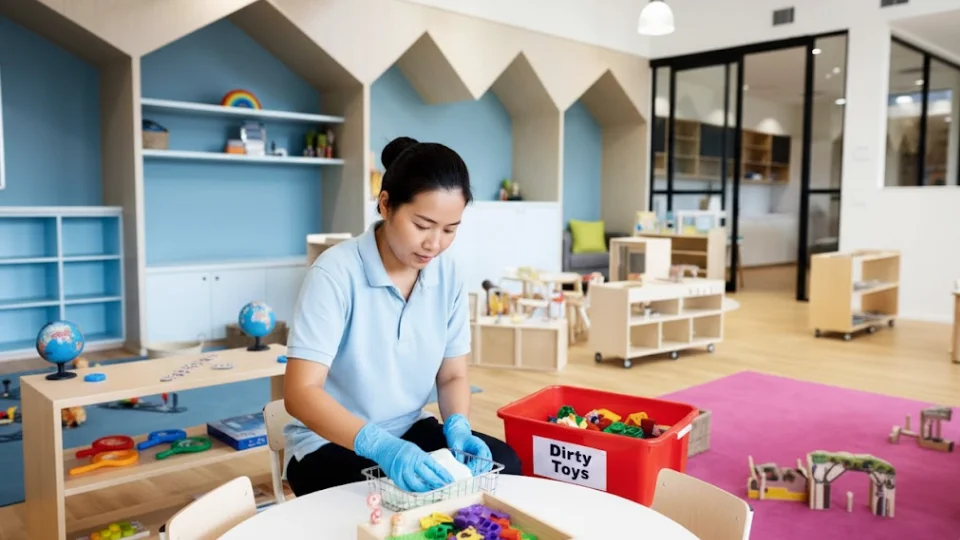
A common workflow used by childcare cleaning services is: collect toys into a labelled tub, wash with warm water and detergent, rinse, apply an approved disinfectant, then air-dry fully before returning them. Air-drying matters because damp toys can attract grime and can irritate skin.

How are soft toys and dress-ups handled safely?

Soft items hold moisture and can trap germs, so they usually need laundering rather than spray-and-wipe cleaning. The aim is to prevent cross-contamination between rooms.

In many centres, childcare cleaning services place soft toys, dress-ups, and fabric cushions into washable laundry bags, then machine wash on an appropriate cycle. They may also recommend limiting soft toys in nurseries unless there is a clear wash schedule and storage plan.

How do they manage toys that cannot be easily washed?

Some toys have batteries, electronics, or materials that do not handle soaking. These still need routine attention because they are often high-touch.

Where possible, childcare cleaning services use detergent wipes first, followed by a disinfectant wipe suitable for the surface, taking care not to oversaturate seams or battery compartments. If a toy is too hard to clean reliably, many teams suggest removing it from shared use or allocating it to one room only.

What happens with shared sensory toys, water play, and sandpit items?

Sensory play is valuable, but it adds extra cleaning complexity. The priority is stopping dirty water, shared tools, and damp surfaces from spreading germs.

Many childcare cleaning services clean and disinfect water-play trays after each use, wash scoops and funnels, and ensure items are fully dry before storage. For sandpit toys, they often wash and dry them on a set schedule and encourage centres to store them off the ground in sealed containers.

How do they handle high-touch surfaces during operating hours?

They focus on frequent, targeted touchpoint wiping without disrupting routines. The goal is to reduce germ load while children are actively moving through the space.

In busy Australian centres, childcare cleaning services may provide a daytime touchpoint schedule for bathrooms, reception counters, door hardware, and staff areas. They often use quick-dry disinfectant wipes or sprays applied to cloths, especially around nappy change areas and bathroom entrances.

How are nappy change areas and bathroom touchpoints treated differently?

These areas are treated as higher risk because of bodily fluids and frequent hand contact. They require a stricter sequence and clearer separation of tools.

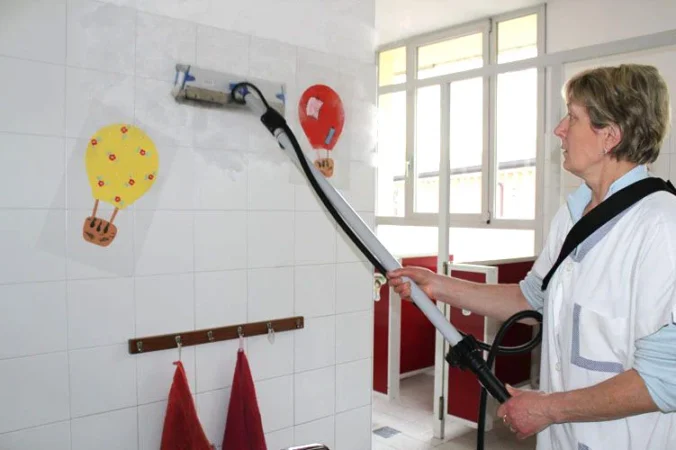
Typically, childcare cleaning services use colour-coded cloths and dedicated chemicals for bathrooms and change stations. They clean, disinfect, and allow proper dwell time on surfaces like change mats, taps, flush buttons, cubicle latches, and sinks, then restock soap, paper towel, and sanitiser where required.

childcare cleaning services

What products do they use, and how do they keep them child-safe?

They use products suitable for childcare environments and apply them in ways that reduce residue and exposure. The centre’s safety expectations drive the product choice as much as the germ target does.

Most childcare cleaning services use TGA-listed disinfectants or hospital-grade options where appropriate, following label directions on dilution and contact time. They also store chemicals in locked areas, avoid strong fragrances where possible, and ensure surfaces are dry before children return to play.

How do they prevent cross-contamination between rooms and age groups?

They control how tools move through the building. Without those controls, germs can travel from a bathroom straight onto classroom tables.

Many childcare cleaning services rely on colour-coded microfibre systems, separate mop heads, and room-by-room sequences that start in lower-risk areas and finish in toilets and waste zones. They may also use separate toy tubs per room so cleaned items do not mix with unclean items.

How is “contact time” managed on busy surfaces?

Contact time is the period a disinfectant must stay wet to work properly. If it is wiped off too soon, the germ-kill claim may not be met.

Professional childcare cleaning services plan touchpoint cleaning so disinfectant can sit for the required time, often by spraying onto a cloth and leaving a thin, even layer on the surface. For some areas, they may cordon off a small section briefly or clean at quieter times like during outdoor play.

How do they handle outbreak periods like gastro or influenza?

They increase frequency, tighten processes, and pay closer attention to shared items. The focus shifts from routine appearance to infection control.

During outbreaks, childcare cleaning services often raise touchpoint rounds, disinfect bathrooms more frequently, and recommend removing hard-to-clean toys temporarily. They may also support the centre with a documented response plan, including which rooms are affected, what was cleaned, and when it was completed.

What role do educators and centre managers play in toy hygiene?

Cleaning teams cannot do it alone because educators control toy rotation and daily play patterns. The best results come from a shared routine.

Many childcare cleaning services ask centres to set clear rules: mouthed toys go into a “to be cleaned” container immediately, toy rotation happens on a schedule, and educators wipe small touchpoints during sessions. Cleaning contractors then handle deep cleaning, full-room disinfection, and end-of-day resets.

Other Resources : Guide to cleaning performance standards for whole

How do they document cleaning for compliance and parent confidence?

They record what was cleaned, when it was done, and any issues found. Documentation helps demonstrate consistent hygiene practices if questions arise.

In Australia, childcare cleaning services may provide checklists for bathrooms, kitchens, and classrooms, along with logs for touchpoint rounds and periodic deep cleans. Many centres also use these records to reassure families, especially during winter illness seasons.

How often should toys and touchpoints be professionally cleaned?

Frequency depends on age group, occupancy, and how the centre runs. As a general rule, higher-use items need more frequent cycles.

Most childcare cleaning services support daily touchpoint disinfection, daily cleaning of nursery toys with frequent mouthing, and scheduled deep cleans weekly or fortnightly for items like shelving, play equipment, and hard-to-reach corners. Centres often add seasonal deep cleans before winter or after major events.

What should an Australian centre ask before hiring a provider?

They should ask how the provider cleans toys, manages chemical safety, and prevents cross-contamination. The answers reveal whether the provider understands childcare realities.

Useful questions for childcare cleaning services include: What disinfectants are used and what is the contact time? How are cloths and mop heads separated? What is the toy cleaning process for plastic and soft items? Can they align cleaning times with naps and outdoor play? Do they provide logs and checklists?

childcare cleaning services

How can centres make toy and touchpoint cleaning easier day to day?

They can simplify the environment so cleaning happens faster and more consistently. Small changes often reduce missed touchpoints.

Many childcare cleaning services recommend limiting overly complex toys, choosing washable resources where possible, using labelled toy rotation tubs, and storing clean toys in sealed containers. They also suggest keeping high-touch zones clutter-free, so door hardware, taps, and tablet stands can be disinfected quickly and correctly.

What does “good” look like after toys and high-touch surfaces are cleaned?

Good cleaning looks consistent, not just shiny. The real sign is that routines are predictable and surfaces are treated in the right order.

When childcare cleaning services are doing the job well, toys are fully dry before reuse, bathrooms smell clean without heavy fragrance, touchpoints are covered daily, and staff know where to put mouthed toys immediately. Most importantly, the centre has a clear system that keeps working even on the busiest days.

Related : What’s a Realistic Church Cleaning Schedule Between Sunday Services?